Understanding Xizang in a Cultural Feast
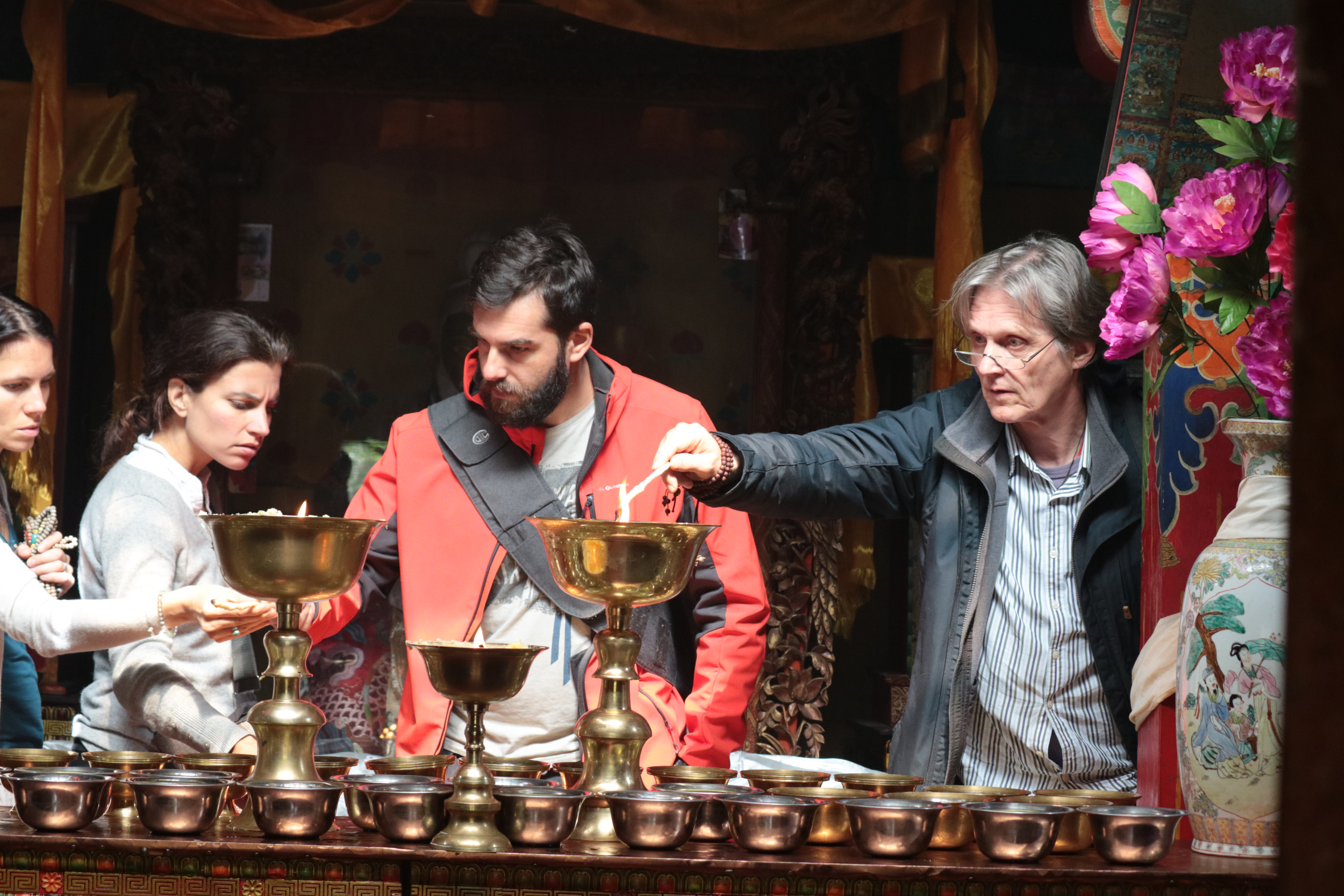
It is said that the soul of Xizang is hidden in the belief, as well as in the daily fireworks and special activities of the local people. On this trip to Xizang, I deliberately avoided the clock in and out of sight, plunged into the local culture and activities, touched the pulse of Tibetan culture, felt the purest Tibetan customs, and understood the love and piety engraved in the bones of this plateau in the fireworks of sutra turning, butter making, and pot jumping.
My cultural journey began with the pilgrimage ceremony on Barkhor Street. Unlike the hustle and bustle of the day, the Barkhor Street in the early morning is the most authentic manifestation of faith. As soon as dawn broke, the local Tibetan compatriots dressed in Tibetan clothing, holding prayer wheels, slowly walked along the prayer path, silently reciting the six character mantra, walking steadily and calmly. I followed their example, slowed down my pace, followed the crowd, and lightly touched the Mani pile on the roadside with my fingertips. Every stone engraved with scriptures carried the prayers of the locals. In the procession of sutras, there are elderly people with white hair, ignorant children, and family members walking side by side. There is no verbal communication, but there is an inexplicable understanding. This faith engraved in daily life is silent but powerful.
Going deep into the homes of Tibetan people, I experienced the most authentic Tibetan way of life and also unlocked the traditional Tibetan technique of making butter. My Tibetan grandmother patiently taught me to pour the prepared fresh milk into a wooden barrel, hold the handle with both hands, and stir it up and down repeatedly until the fresh milk layers and the upper layer condenses into golden butter. The seemingly simple action was very laborious, and soon I was panting heavily. I finally understood that every spoonful of sweet butter contained the hard work of the Tibetan people. Grandma smiled and handed me a spoonful of the newly made butter, mixed with tsamba, which was mellow and sweet in the mouth. It was the most authentic taste in Tibet. In the afternoon, we sat together, drinking butter tea, listening to our grandmother tell stories about Tibetan festivals, and listening to her sing Tibetan songs. In these simple moments, we were filled with the tenderness and enthusiasm of collectors.
The most shocking event for me was the chance encounter with the Tibetan Fruit Viewing Festival. Wangguo Festival is a traditional festival for Tibetan people to celebrate a bountiful harvest. On that day, local Tibetan compatriots wear brightly colored Tibetan clothing, adorn their heads with ornaments, hold barley ears, and parade along the fields, praying for good weather and abundant harvests in the coming year. In the parade, there are lamas dressed in crimson robes reciting sutras and praying for blessings, girls dancing cheerful Guozhuang dances, and young men playing Tibetan suona, with laughter and joy echoing on the grassland. I was infected by the liveliness and devotion, clapping and dancing with the locals. Although I didn't understand Tibetan, I could feel the joy and hope in their hearts. At that moment, I seemed to have truly integrated into this land and understood the Tibetan people's love for life.
In my spare time, I also went to a Tibetan thangka workshop to experience the charm of thangka up close. The Thangka painter sat in front of the desk, holding a fine brush and sketching and coloring one by one, with a focused and devout expression. The painter told me that thangka is an artistic treasure of Tibetan Buddhism, and each thangka requires months or even years of time. From the blending of pigments to the outlining of lines, there are strict requirements, and every stroke carries faith and blessings. I tried to pick up the paintbrush and imitate the movements of the painter, only to realize that seemingly simple lines actually require great patience and skill, and I also gained a better understanding of the Tibetan people's adherence and inheritance of culture behind thangka.
This journey does not have stunning snow capped mountains and lakes, but it has the most touching cultural fireworks. I understand faith through the transmission of scriptures, feel hardship in making butter, experience joy during the Wangguo Festival, and see perseverance in the Tangka workshop. It turns out that the beauty of Xizang is not only the natural scenery, but also the culture and pyrotechnics handed down from generation to generation, and the pure, enthusiastic and pious appearance of the local people.
On the return trip, I took with me a small thangka, as well as the tenderness and emotion of Tibet. This journey immersed in Tibetan culture has made me understand that the most meaningful part of traveling is never seeing many landscapes, but entering the local life, experiencing different cultures, and understanding different lives. Xizang's culture, like the sunshine on the plateau, is warm and powerful, like the whispers of prayer flags, long and distant. This beauty will always remain in my heart.


1
Email*