The Millennium Epic of Tibetan Architecture at the Peak of Red Mountain
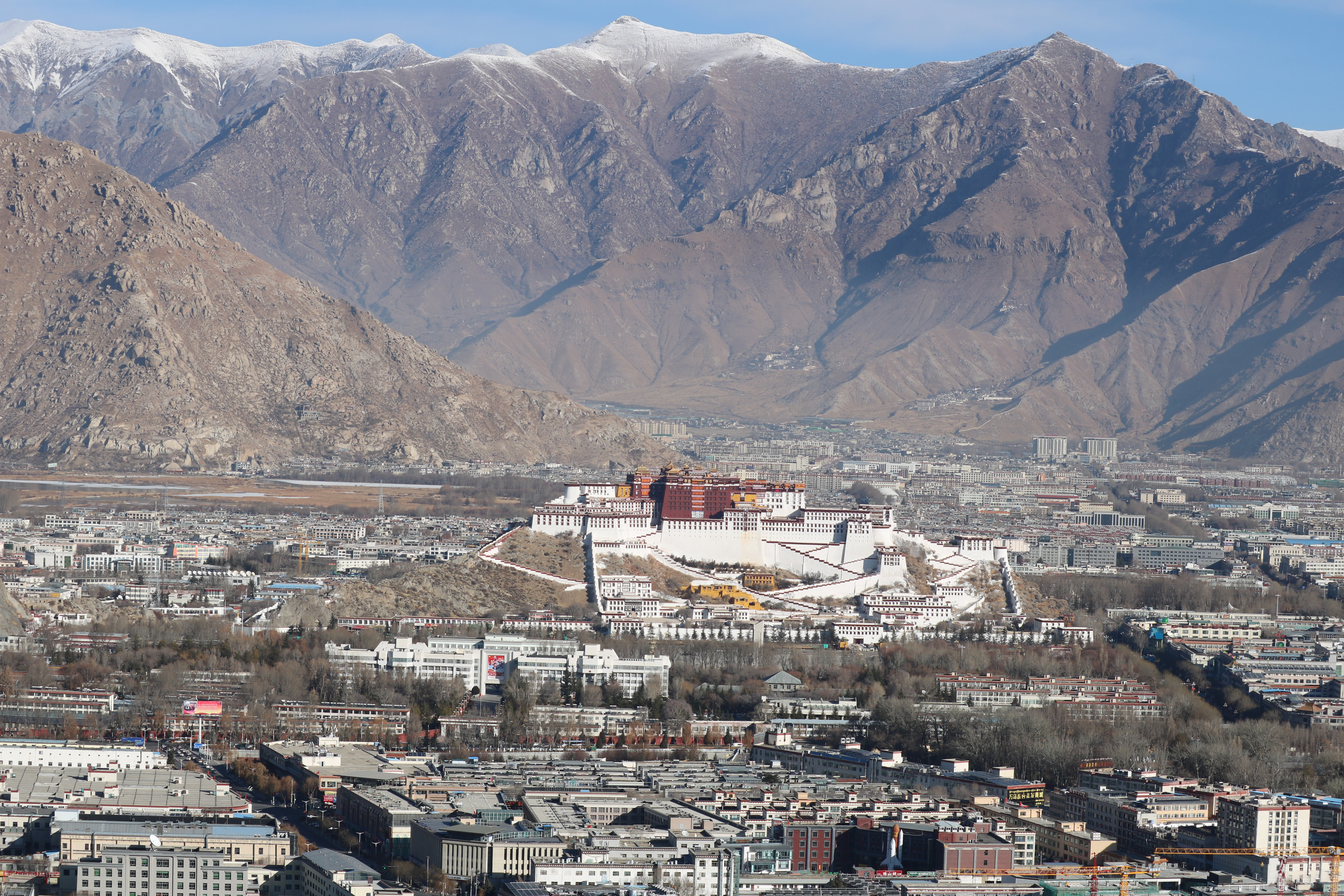
If Xizang is the epitome of Tibetan culture, the Potala Palace is the most brilliant treasure in this cultural palace. On this trip to Xizang, I gave all my preferences to this palace on the top of the Red Mountain. Instead of rushing to clock in, I just wanted to calm down, touch its architectural texture carefully, listen to the story behind each brick and tile, and understand Xizang's millennium history and belief power in the ingenuity and solemnity of Tibetan architecture.
When I first saw the Potala Palace, I was amazed by its majestic aura. It is built along the mountain, covering a total area of 360000 square meters. The main building is 117 meters high and has 13 floors. The red and white walls are arranged in a staggered manner, and the golden roof shines brightly in the sunshine, complementing the distant snow capped mountains and the blue sky, as if growing out of the world. It has both the solemn and majestic palace and the quaint and lively Tibetan architecture. Standing in any corner of Lhasa city, as long as you look up, you can always see its figure. It is like a silent old man, quietly guarding this snowy holy city and witnessing the vicissitudes of thousands of years.
Climbing slowly along 1080 steps, one can feel the ingenuity of the Potala Palace architecture at every step. The steps are paved with bluestone slabs, which have been eroded by wind and rain for thousands of years, and the surface has become smooth and warm. Each stone slab is engraved with the traces of time. As I walked forward, I discovered that the architecture of the Potala Palace combines Tibetan, Chinese, and Nepalese styles, yet also has its own unique characteristics - the Red Palace is a religious activity venue, and the walls are made of the local unique "white horse grass" masonry, which is light and sturdy in texture. The red walls symbolize solemnity and sacredness; The White House is a residential and office area, with white walls made of a mixture of lime, milk, and honey, pure and elegant. From a distance, the red and white complement each other, creating distinct layers.
Entering the interior of the Potala Palace, one is even more amazed by its architectural details. The columns in the hall are tall and straight, all carved from giant trees. The columns are adorned with exquisite Tibetan patterns, which are complex yet orderly. Each carving embodies the hard work of the craftsmen. The roof adopts a Tibetan style gable roof design, covered with gilded copper tiles. The tiles and eaves are carved with auspicious beasts such as dragons, phoenixes, and lions, which are lifelike and not only demonstrate the majesty of the royal family, but also contain auspicious meanings of Tibetan Buddhism. The murals in the hall are even more artistic treasures. The walls are covered with colorful murals, which cover the stories of Tibetan Buddhism, the historical legends of Xizang, and the landscapes. The colors are long-lasting, the lines are exquisite and smooth, and each mural is a miniature Tibetan epic.
In the Spirit Pagoda Hall of the Red Palace, I felt the deep integration of Potala Palace architecture and faith. Here are the stupas of successive Dalai Lamas, among which the stupa of the fifth Dalai Lama is the most magnificent, standing 14.85 meters high and made of eight tons of gold. The tower is adorned with countless jewels, jadeite, and agate, shining brilliantly. The architectural design of the Lingta is exquisite, with exquisite scriptures and patterns carved on the tower body, which not only reflects the exquisite craftsmanship of Tibetan architecture, but also carries the Tibetan people's admiration and prayers for the Dalai Lama. The butter lamps in the hall are always on, with flickering lights reflecting the spirit tower and murals. The air is filled with a faint fragrance of butter, making people unconsciously feel awe.
Standing at the highest point of the Potala Palace, overlooking the entire city of Lhasa, the view is broad and distant. The distant Barkhor Street and Lhasa River can be seen in full view, and the scattered Tibetan style houses and modern buildings complement each other perfectly, blending ancient and modern elements here. A gentle breeze blows by, and the prayer flags sway gently in the wind, as if telling a story of a thousand years. At that moment, I suddenly understood that Potala Palace is not only a building, but also the peak of Tibetan architectural art, the spiritual sustenance of Tibetan people's belief, and the epitome of Xizang's millennium history and culture.
When leaving the Potala Palace, the sunset cast a warm golden halo on it, making it even more solemn and gentle. This encounter with the Potala Palace made me understand the ingenuity and wisdom of Tibetan architecture and the profound culture of Xizang. It doesn't have the hustle and bustle, but it has the power to strike people's hearts; It doesn't have fancy decorations, but it has a charm that lasts for thousands of years.
The Potala Palace, the millennium palace on the top of the Red Mountain, engraved the history and belief of Xizang with its architectural texture, and cured the hearts of everyone who arrived with its solemnity. This journey has become particularly meaningful because of the Potala Palace, and its beauty and weight will forever remain in my memory, becoming the most precious imprint of the hidden land in my heart.


1
Email*